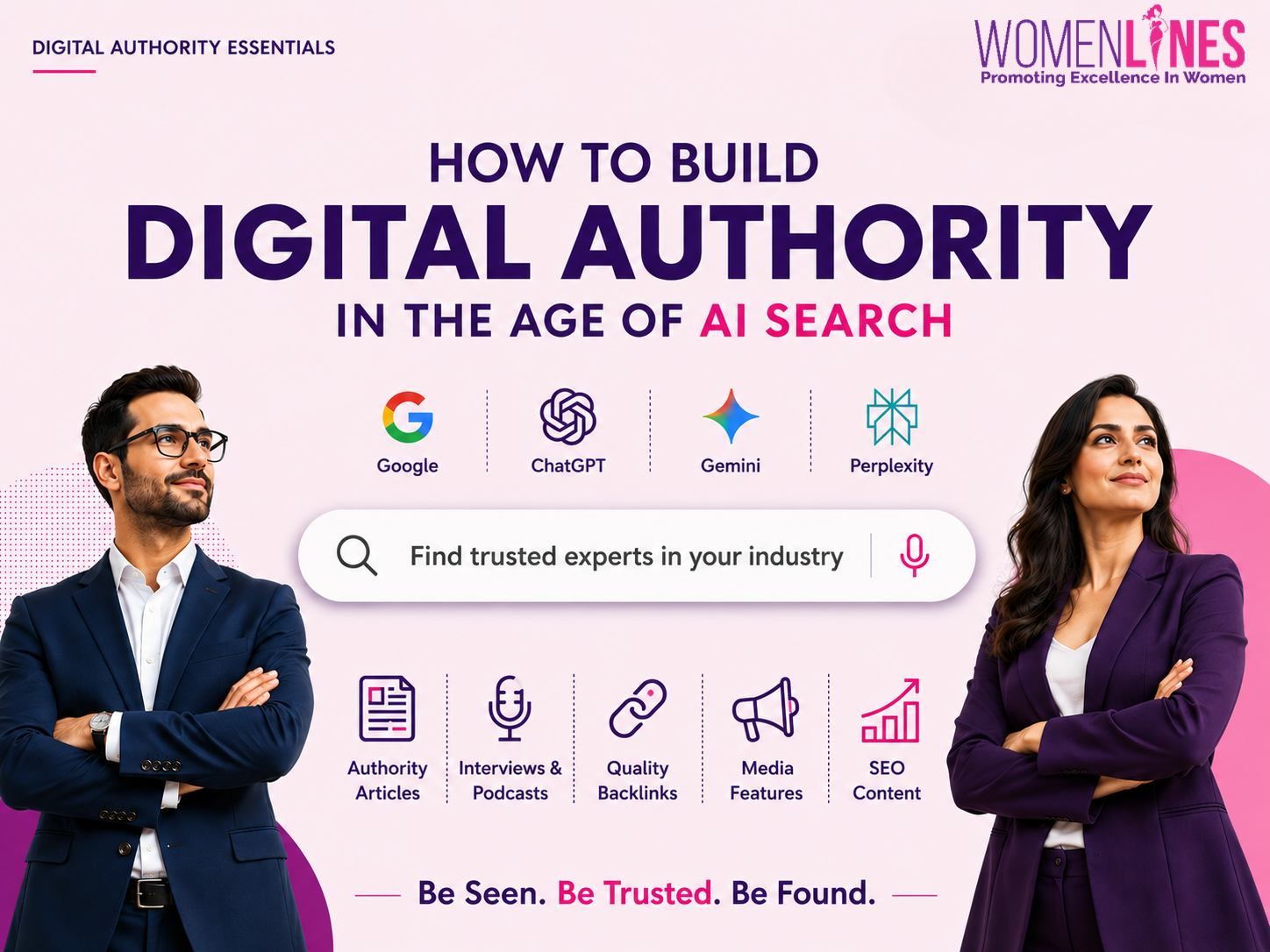
I’ll be honest with you — learning how to build digital authority in the age of AI search has become something of an obsession for me lately. Every week I go digging, and every week I come back with something that genuinely shifts how I think about online visibility. This week was one of those weeks. What I uncovered is something most entrepreneurs, coaches, consultants, and business owners have zero awareness of — yet right now, it is quietly deciding who gets found on the new internet and who disappears entirely. I want to walk you through all of it, in plain language, with the real data behind it, so you can start acting on it today.
We Have Officially Entered the Age of the Answer Engine
Let me start with something you need to sit with for a moment.
When you type a question into Google today, you often don’t get a list of websites. You get a direct answer — written for you, synthesised from across the internet, sitting right at the top of the page before you even see a single link. Google calls these AI Overviews. ChatGPT and Perplexity do the same thing, just without the links at all.
This feels efficient. And it is — for the person searching. But for businesses, it has created a new and very real risk. Let’s call it what it is: The Great Invisibility.
Here is how the new world works, brutally plainly. In traditional search, there were ten blue links on page one. You might be number seven, still pick up traffic, still have a chance. In the AI answer world, there is no list. The AI gives one answer. One source. One brand. If that is not you, you do not just drop a few spots in the rankings — you cease to exist in that moment entirely.
Here are the numbers that back this up, all from verified 2026 research:
- Google AI Overviews now appear in approximately 25% of Google searches globally — up from 13% just a year ago — based on Conductor’s analysis of 21.9 million queries
- ChatGPT processes approximately 2.5 billion prompts per day globally — confirmed by OpenAI via Axios and TechCrunch, and compiled in detail by Digital Elevator
- The Google AI Overview box now reaches a peak height of approximately 1,200 to 1,340 pixels on screen, meaning traditional organic results are buried well below what most users ever scroll to see — BrightEdge tracking data, via SQ Magazine, February 2026
- 87.4% of all AI referral traffic across industries comes from ChatGPT alone, making it the single most important AI platform for brand visibility — Conductor 2026 AEO/GEO Benchmarks Report
- Organic click-through rates have dropped 61% on queries where a Google AI Overview is present, falling from 1.76% to 0.61% — Seer Interactive’s study of 3,119 search terms across 42 organisations, June 2024–September 2025
If your brand is not being cited by AI systems, you are invisible to a massive and rapidly growing share of the people looking for exactly what you offer.
So the question every entrepreneur should be asking is: what decides whether AI mentions you — or your competitor?
The answer is Digital Authority. And specifically, a layer of it that almost nobody outside specialist digital marketing circles knows about.
What “Digital Authority” Actually Means (And Why It Is Different From What You Think)
Most people, when they hear “digital authority,” think it means having a popular website, a big following, or years in their industry. That is not what we are talking about here.
Digital Authority is the level of trust and credibility your brand holds in the eyes of AI systems. Think of it as your brand’s reputation score — not with humans, but with machines.
When someone asks ChatGPT “who is the best [your profession] for [your niche],” Digital Authority determines whether the AI names you as the expert or leaves you out entirely.
It is important to understand the difference between this and what most people call Brand Authority — the reputation you have with human customers. You can have a brilliant brand, a loyal following, and a beautifully written website, and still be completely invisible to AI.
That is because AI systems do not experience your brand the way humans do. They evaluate something else entirely: a machine-verifiable, data-driven trail of evidence that proves you are a credible, consistent, and authoritative source of information on your topic.
Brand Authority lives in the minds of your customers. Digital Authority lives in the knowledge graphs of search engines and the training data of AI models.
You need both. But right now, most entrepreneurs are building one and ignoring the other.
The Secret Layer: Entity Authority
Here is the specific insight that stopped me in my tracks this week.
AI systems do not think in terms of websites or pages. They think in terms of entities — recognisable, verifiable concepts that exist in the world. Your brand is an entity. Your name is an entity. Your area of expertise is an entity. The relationships between your brand and other credible organisations are entities too.
When an AI answers a question, it draws on a picture it has already built — a map of which entities exist, what they stand for, and how they relate to each other. This is called the Knowledge Graph.
If your brand does not have a clear, consistent, machine-readable presence in that knowledge graph, you simply do not get cited. Full stop.
This is what researchers and advanced digital marketers are now calling Entity Authority — and it is the most underused lever for digital visibility available to entrepreneurs today.
The Data That Should Make You Act This Week
This is not theory. The research is clear and the numbers are striking.
Consistent entity information across the web increases your probability of being cited by AI by 28 to 40%. Simply ensuring your brand name, description, and positioning are identical across your website, LinkedIn, Google Business Profile, and industry directories can increase your AI visibility by nearly half again. (Averi.ai — The Definitive Guide to LLM-Optimized Content, April 2026)
Brands are 6.5 times more likely to be cited in AI answers than non-branded entities. Building a clear, recognisable, verifiable brand identity is now a technical SEO objective, not just a marketing goal. (Position Digital, cited in pSEO LLM and Search Statistics 2026 and AirOps AI Search Playbook)
Businesses present on four or more platforms are 2.8 times more likely to appear in AI answers. Not because of the volume of content they publish, but because their presence across multiple authoritative sources gives AI the verification signals it needs to trust and cite them. (The Digital Bloom, cited in pSEO LLM and Search Statistics 2026)
85% of brand mentions in AI answers come from third-party pages — not your own website. Publishing great content on your blog is necessary but not sufficient. What other websites, publications, directories, and communities say about you matters just as much — arguably more. (AirOps: The Influence of Offsite Signals in AI Search, analysis of 21,000+ brands)
44.2% of all AI citations come from the first 30% of a piece of content — the introduction. AI systems do not read the way humans do. They scan for clean, extractable answers. The insight needs to come first. (Omnibound AI Search Statistics, May 2026)
One more number worth sitting with: traffic referred from ChatGPT converts at 16% — compared to Google organic’s 1.8%. That is nearly nine times higher conversion intent. The volume of AI referral traffic is still small today, but the quality of the visitors it sends is extraordinary. (Seer Interactive case study, reported by TechnologyChecker.io)
The New Framework: From SEO to Digital Authority
Here is the clearest way to understand how digital authority is built today. Think of it as four stages that build on each other.
Stage 1: SEO — You Make a Claim
Traditional search engine optimisation is still relevant. Publishing well-structured, findable content on your website says to the internet: “I am an expert in this topic.” But SEO alone only makes you an option. It puts you in consideration. It does not make you the authority. A hundred other businesses are making the same claim.
Stage 2: AVO — You Get Verified
AI Visibility Optimisation is the engineering layer that turns your claim into verifiable proof. This means creating author pages that demonstrate real expertise, publishing original research that only you can produce, building entity relationships that AI can map and confirm, and acquiring citations from respected external sources. Think of AVO as AI running a background check on your brand. It is not enough to say you are an expert. You have to prove it in a way a machine can verify.
Stage 3: GEO — You Get Recognised
Generative Engine Optimisation (GEO) is about structuring your content for machine readability, answering conversational questions with clarity and depth, and maintaining entity consistency — ensuring AI never encounters contradictory information about your brand across different platforms. When you achieve this, AI systems begin including your brand name in their synthesised responses.
Stage 4: AEO — You Become the Answer
Answer Engine Optimisation is the final stage every entrepreneur should be building toward. You are no longer just a reference the AI might mention. You are the definitive answer. When AI systems have recognised you as a verified, consistent, authoritative entity on your topic, they actively select you as the primary source. This is true digital authority in 2026.
Five Things You Can Do This Week
No technical skills required for any of these.
1. Search your brand in ChatGPT and Perplexity right now. Type your brand name. Then type the question your ideal customer would ask that you should be the answer to. Read the responses carefully. Is your brand mentioned? Is what it says accurate? Are important relationships, credentials, or services missing? Write down everything that is wrong or absent. This is your entity authority baseline.
2. Create a Facts page on your website. This is the single highest-impact, lowest-cost action available to you today. A Facts page is a dedicated page that states, in plain and direct language: what your brand is, what you do and do not do, who you serve, what you are known for, the credentials of your key people, and your important relationships and partnerships. Write it as if you are writing for a very literal, methodical reader who needs every connection spelled out explicitly — because that is exactly what AI is.
3. Audit your brand description across platforms. Go to your website, LinkedIn, Google Business Profile, Crunchbase, and any industry directory listings. Is your brand name, tagline, and description exactly the same everywhere? Even small inconsistencies create confusion for AI systems building their picture of your entity. Fix them this week.
4. Document your key relationships online. Think about every partnership, collaboration, client feature, publication mention, association membership, or credential relevant to your authority. Now ask: is each of these relationships clearly, explicitly stated somewhere online where AI can find and verify it? If not, this is the week to change that.
5. Lead every piece of content with the answer. Because 44.2% of AI citations come from the first 30% of a page, stop burying the insight at the end of your articles. State what you know, first. Explain it after. This single change to how you write will meaningfully improve how often AI chooses your content as a source over a competitor’s.
The One Shift That Changes Everything
You used to build digital authority by getting Google to rank your pages. The game was about keywords, backlinks, and click-through rates.
Now you build digital authority by becoming a verified, trusted entity in the knowledge graph of AI systems. The game is about clarity, consistency, and machine-readable credibility.
The good news for entrepreneurs is that most of your competitors have not woken up to this yet. The window to establish entity authority before your space gets crowded is open right now — but it will not stay open forever. Authority compounds. Once AI systems recognise you as the trusted source for your topic, that recognition reinforces itself over time. The brands building this foundation today will be extraordinarily difficult to displace six months from now.
Your brand deserves to be the answer. Start building the evidence trail that proves it.
Your action list for this week:
- Search your brand in ChatGPT and Perplexity. Screenshot what you find.
- Write and publish your Facts page before this week ends.
- Check your brand description across your five most important platforms. Make them identical.
Sources:
| Fact | Source |
|---|---|
| AI Overviews appear in ~25% of Google searches | Conductor 2026 AEO/GEO Benchmarks Report |
| ChatGPT processes ~2.5 billion prompts/day | FatJoe ChatGPT Stats / Digital Elevator |
| AI Overview box height 1,200–1,340px | SQ Magazine / BrightEdge, Feb 2026 |
| 87.4% of AI referral traffic from ChatGPT | Conductor 2026 AEO/GEO Benchmarks Report |
| 61% organic CTR drop with AI Overviews | Seer Interactive, Sept 2025 — also covered by Search Engine Land |
| 28–40% citation increase from entity consistency | Averi.ai Definitive Guide to LLM-Optimized Content |
| Brands 6.5x more likely to be cited | AirOps AI Search Playbook / pSEO LLM Statistics |
| 2.8x citation rate with 4+ platforms | The Digital Bloom, cited in pSEO LLM Statistics |
| 85% of AI brand mentions from third-party pages | AirOps: Influence of Offsite Signals in AI Search |
| 44.2% of citations from first 30% of content | Omnibound AI Search Statistics, May 2026 |
| ChatGPT referral traffic converts at 16% vs Google’s 1.8% | TechnologyChecker.io / Seer Interactive case study |
| Entity relationship content audit (About page / Facts page fix) | Search Engine Land Content Strategy 2026 |
| What is GEO | Search Engine Land — What Is GEO |
Author
Charu Mehrotra
Founder Womenlines
Follow Womenlines on Social Media