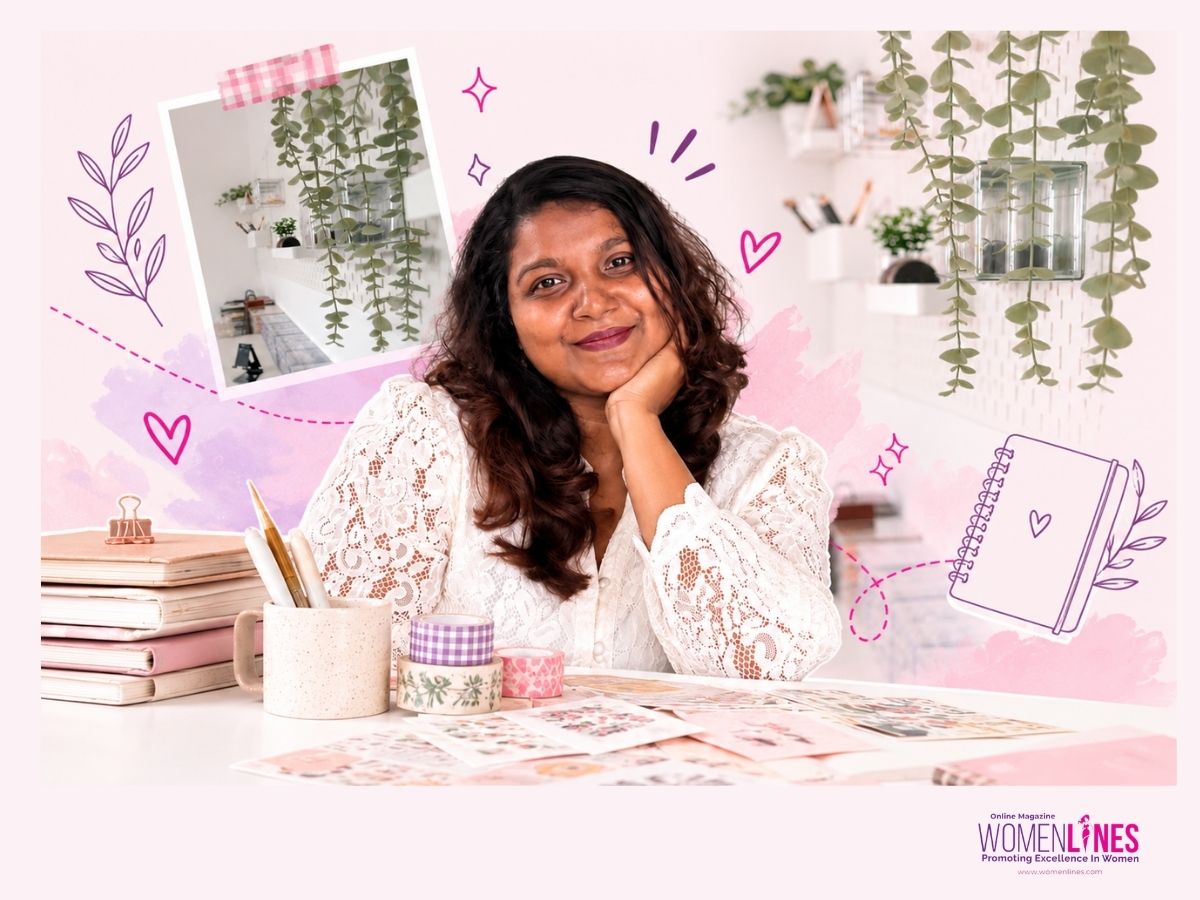
Most small businesses don’t start with a business plan. Ours Stationery Business started with a drawer.
If you keep a journal, you’ll know the kind of drawer we mean: half-used washi rolls, sticker sheets too pretty to peel, a stamp bought on a whim, and scraps of paper saved “for a spread someday.” In India, it usually comes with a frustration too. You find the perfect sticker sheet from a studio abroad, add it to your cart, and watch the shipping come to more than the stickers. You close the tab. The next day you open it again and start to wonder how many other people are closing that same tab.
Quite a few, it turns out. This is the story of how that drawer became Avyanna Decore, and what we’ve learned about building a small, specific stationery business in a country that’s only just discovering how big its creative community is.
Why paper can be more than a hobby
From the outside, journaling looks like a quiet, solitary habit. A notebook, a cup of chai, a roll of tape. Inside, it’s a whole culture. There’s a shared vocabulary of spreads, layering, ephemera and deco. There are collectors who follow sticker releases the way others follow sneaker drops, and artists whose work fans can recognise instantly.
That’s why it can support a business instead of fading as a trend. Journalers rarely buy once. They build collections, develop a style and keep coming back for pieces that suit it. Scrapbookers, planner fans, art journalers, stamp lovers and sticker collectors also tend to be the same people, so looking after one group well often wins you the others.
Finding the gap nobody was filling
India has never been short of stationery. What was harder to find was the artist-made, collectible kind that journalers abroad had enjoyed for years. Getting it here usually meant paying steep international shipping, asking a friend to bring some back from Seoul or Tokyo, or going without.
At the same time, the community was clearly growing. Instagram and YouTube filled up with Indian journalers sharing spreads and hauls, and a few Indian shops had already started serving them. That told us the demand was real.
So the gap wasn’t that nobody sold journaling supplies. Very few places brought original artist work from around the world, across the whole journaling kit, to Indian buyers under one roof. That narrow focus turned out to be a strength. A niche is easier to explain, easier to become known for and much easier to serve with care.
What selling only online teaches you
A physical shop was never an option. Journalers in India are scattered across metros and small towns, often the only journaler among their friends, and the internet is where they already find each other.
The catch is that online, nobody can touch anything. Ask any small seller about the message that starts with “I thought it would be bigger.” Usually, there’s nothing wrong with the product. The listing just let the buyer picture something different. Those messages sting, but they show you exactly which photo or line needs work.
The fix isn’t glamorous. Photograph products next to something familiar so people can judge the size. Describe what an item does on a page, not just what it is. Be honest about size and finish. In a small community where people compare notes, accuracy earns more trust than hype.
Working with independent artists across borders
Much of what journalers love comes from tiny studios, sometimes a single illustrator in Seoul, Taipei or Tokyo. Buying from them is nothing like ordering from a wholesaler. You deal with language barriers and time differences, limited runs that never restock, slow international payments, and customs delays that can derail a launch you planned for weeks. An email might go unanswered for a week because the artist is the entire company and is busy drawing.
And then the box finally arrives. The tapes are even lovelier in person, and suddenly the wait feels worth it.
The harder part is deciding what to bring in, because there’s always another beautiful thing. Is it original? Will it work on a real page, or only in a photo? Does it go with what people already own? Is it worth the cost of shipping it this far? A curated selection only stays curated if you’re willing to leave most things out.
Introducing products most people had never heard of
This was the challenge we underestimated the most. Plenty of Indian buyers know washi tape by now. Far fewer know what makes PET tape different, what a transfer sticker does, why a clear stamp needs an acrylic block, or what sealing wax beads are for, apart from wedding invitations.
When a product is unfamiliar, the price feels higher and the purchase feels riskier. So a lot of the work turned into teaching.
• PET tape is easiest to explain as washi’s glossier, clearer cousin, and it looks beautiful layered over artwork.
• Stamps and ink pads need to be seen in use. In a product photo, a stamp looks like a block of wood. Pressed into a border across a page, it makes sense instantly.
• Wax sealing isn’t only for weddings. It looks just as good on letters, journal pockets and gift tags.
• Paper ephemera rarely clicks until someone sees it layered into a spread.
What helped most was the kind of content journalers already make for each other, like close-up process shots, quick flip-throughs and simple “here’s how I’d use this” ideas. Once a product makes sense to someone, it stops feeling niche.
Why price is the wrong battle
Imported, artist-made stationery will never be the cheapest thing online. Shipping costs are high, margins are thin, and artists deserve to be paid fairly. Competing on price here is usually a slow way to lose.
What keeps people coming back is feeling understood, and this is where small shops have a real advantage over big marketplaces. They can be part of the community instead of simply selling to it. That means sharing pages, answering questions honestly (even when the honest answer is “you probably don’t need this yet”) and giving credit to the artists behind the work. It’s slower than running a sale, but it’s the only thing we’ve seen build something lasting.
The realities of running a small, women-led business
Running a small creative business in India means wearing every hat. On a single day you might be the buyer, photographer, copywriter, packer, customer support team and accountant. Courier delays and payment gateway glitches don’t care how pretty your photos are.
Being a woman in charge adds another layer. Many women founders know what it’s like to be asked, about their own business, “So who handles the business side?” or to hear it called “a nice little hobby.” Then there’s the pressure from within: undercharging for your time, apologising when you ask to be paid, fitting the work around family responsibilities, and packing orders at the dining table after everyone else has gone to bed.
There’s an upside too. Most of the people we sell to are women between 18 and 40, so understanding them doesn’t take market research. You’ve been the one hunting for the right sticker at midnight. You know why a small, beautiful thing can matter on a hard day.
Lessons for women turning a creative interest into a business
-
Start with the community you’re already part of. You know its language, its frustrations and what excites it. That’s your head start.
-
Go narrow before you go wide. “Stationery” is too big to own. A specific corner of it, done well, is what people will remember you for.
-
Price like a business, not a hobby. Count your time, packaging, failed deliveries and returns. If the numbers only work when you work for free, they don’t work.
-
Protect the part you love. Keep one journal that’s just for you. The hobby that started it all shouldn’t turn into nothing but spreadsheets.
-
Find other women doing the same. They’re the best source of practical advice and the quickest cure for feeling alone in it.
-
Grow at your own pace. Staying small isn’t failing. Plenty of meaningful businesses are small on purpose.
A story bigger than any one business
The best part of this work is watching India’s creative culture grow in real time. Indian journalers now have loyal followings, local shops are serving the hobby in their own ways, and beginners are discovering that a notebook can be a place to play, not just to take notes. No single brand built that, and no single brand will own it.
So if you’re looking at your own overflowing drawer and wondering whether it could become something more, it might. It will be slower, messier and far more ordinary than it looks from the outside. But turning something you love into work you’re proud of is a pretty good way to spend a few years.
Also Read: Atelier Emine: Where Istanbul Heritage Meets Contemporary Couture Handbags
Follow Womenlines on Social Media