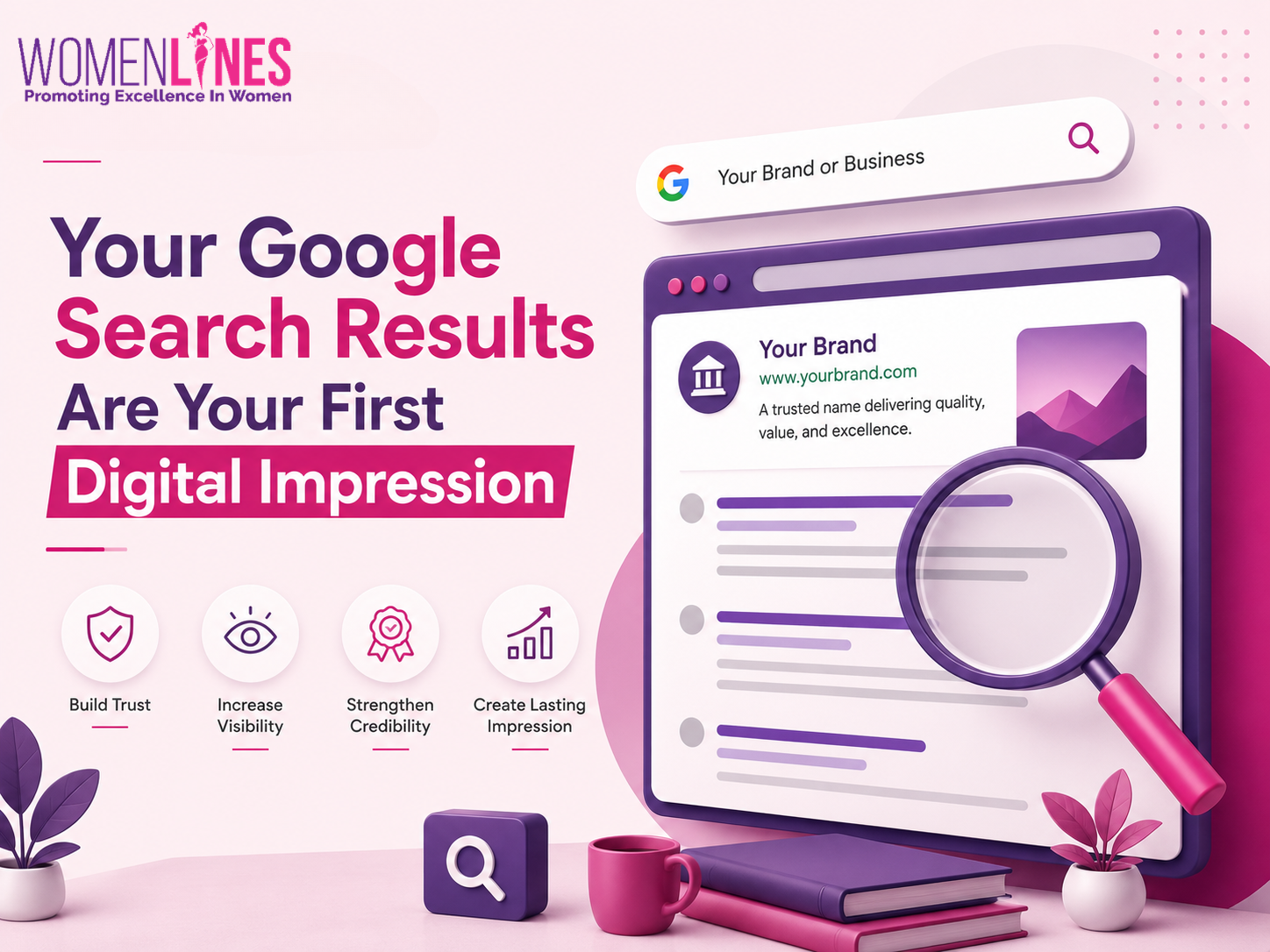
Google search results are often the first impression people have of your brand — yet most business owners have never once looked at what the world actually sees when someone searches their name online.
Imagine this.
A potential client hears about you at a networking event. They’re curious. Within seconds, they pull out their phone and type your name into Google. What appears next silently shapes their perception of your credibility, professionalism, authority, and trustworthiness — long before you ever get a chance to speak to them.
What comes up?
Is it a glowing media feature that positions you as the expert you are? Or is it… crickets? An abandoned Twitter account from 2015? Worse — a bad Yelp review from a disgruntled customer who didn’t read the refund policy?
“Your Google result is your digital handshake. And right now, most business owners have no idea what hand they’re extending.”
Here’s the uncomfortable truth: before a potential client emails you, calls you, or clicks ‘Connect’ on LinkedIn — they Google you. And whatever those first few results say about you becomes their very first impression. Not your pitch deck. Not your website homepage. Google.
This is the invisible first impression — and it’s costing women founders deals, opportunities, and credibility every single day.
Why Your Google Result Matters More Than Your Website
Let’s start with the data, because these numbers should make every business owner sit up straight-
99%+ of clicks go to page one results — page two gets under 1%. If you’re not on page one, you’re effectively invisible. (Backlinko Click-Through Rate Study)
98% of consumers used the internet to find a local business in the past year — making your online presence non-negotiable. (BrightLocal Consumer Review Survey, 2024)
89% of B2B decision-makers say thought leadership directly influences whether they trust an organisation — before any sales conversation begins. (LinkedIn-Edelman B2B Thought Leadership Study)
58.5% of all Google searches are now ‘zero-click’ — meaning your Knowledge Panel result IS the only thing many people ever read about you. (SparkToro & Datos, 2024)
Sources:
Backlinko: Google Click-Through Rate Study
BrightLocal Consumer Review Survey 2024
LinkedIn-Edelman B2B Thought Leadership Study
SparkToro & Datos: 2024 Zero-Click Search Study
That last one is the one that keeps digital strategists up at night. If 58% of searches end without a click, that means your Knowledge Panel — the box Google generates about you on the right side of the screen — is the entire story people read. And most founders have never even seen what theirs says.
The Problem: What’s Silently Hurting Your Credibility
Here’s what most business owners don’t realise: Google is making decisions about your authority right now, without your input.
Google builds a picture of who you are by scanning media publications, directories, social profiles, structured data on your website, and third-party mentions. If those signals are weak, outdated, or inconsistent — your result looks weak. And a weak Google result silently tells every visitor:
“We’re not paying attention.”
Here’s what the typical unmanaged search result looks like for a founder who’s been busy building instead of managing their presence:
-
An outdated bio from 2018 that still says ‘young startup’ — when you’ve been running for seven years
-
A pixelated profile photo in the Knowledge Panel, or no photo at all
-
Old press releases ranking above your actual website
-
A competitor’s content appearing for searches of your own name
-
A negative review sitting in the top five results with no positive press to push it down
That one second of confusion — that flicker of doubt when someone reads your result and thinks ‘hmm, is this still active?’ — is enough for a prospect to quietly choose your competitor. Without telling you. Without giving you a chance to respond.
What a High-Authority Google Result Actually Looks Like
Not sure what you’re aiming for? Search ‘Sara Blakely’ or ‘Arianna Huffington.’ Notice how their entire first page of results reads like a curated story of credibility. That doesn’t happen by accident.
A high-authority branded search result has these elements:
-
A verified Google Knowledge Panel with your current photo, accurate title, and up-to-date description
-
Media features on trusted publications appearing on page one
-
Consistent, professional social profiles (LinkedIn, Instagram) in the top five results
-
Podcast appearances or video interviews that reinforce your expertise
-
Zero negative or irrelevant content visible without scrolling
When someone Googles you and sees this — they’ve already decided to trust you before they’ve read a single word you’ve written.
The Results: What Happens When You Take Control
This is where it gets exciting. Because fixing your Google presence isn’t just about vanity — it creates measurable business outcomes.
3x higher conversion rate on inbound enquiries for founders with strong branded search results. (BrightLocal Consumer Review Survey, 2024)
46% average increase in website traffic following earned media placements on high-authority publications. (Moz Digital PR Case Studies)
89% of B2B buyers say thought leadership content directly influences their purchasing decisions. (LinkedIn-Edelman B2B Thought Leadership Study)
Sources:
BrightLocal Consumer Review Survey 2024
LinkedIn-Edelman B2B Thought Leadership Impact Study
5 Things You Can Do This Week
You don’t need a PR agency or a six-month strategy. Start here.
1. Audit yourself in private (incognito) mode
Open a private browser tab. Google your full name. Then Google your business name. Screenshot everything on the first page. This is your baseline — and most people are genuinely shocked by what they see.
2. Claim your Google Business Profile
Even if you’re a personal brand or service-based business, you can have one. It’s free and directly influences your Knowledge Panel. If you haven’t claimed it, someone else — or Google’s algorithm — is controlling that information for you.
3. Add structured data (schema markup) to your website
This is the technical signal that tells Google exactly who you are, what you do, and how to describe you. Use Google’s free Structured Data Markup Helper — no coding knowledge required. This single step can accelerate your Knowledge Panel appearing.
4. Get published on an indexed, trusted media platform
One editorial feature on a domain Google trusts is worth more for your search presence than 100 social media posts. Google’s algorithm treats external media mentions as third-party endorsements of your authority. This is the single highest-leverage action most founders are not taking.
5. Audit consistency across every platform
Your name, title, and bio description must be identical across your website, LinkedIn, Instagram, and every publication you appear in. Google uses ‘entity recognition’ to build your profile — inconsistency confuses the algorithm and weakens your panel. Yes, that includes the Medium profile you set up in 2019 and forgot about.
The Uncomfortable Final Question
Right now, while you’re reading this, someone is Googling you.
Maybe it’s a potential client who just saw your Instagram post. Maybe it’s a journalist researching a story. Maybe it’s a collaborator who was referred to you by a mutual contact.
“Every day you delay building your digital authority, someone else in your space is filling that space on Google. The question isn’t whether you need a strong search presence. The question is — who is reading your Google result right now, and what are they deciding?”
Before your next post goes live, before your next pitch goes out — Google yourself. What shows up might be saying more about your brand than your latest content ever could.
Ready to build your digital authority?
Author
Charu Mehrotra
Founder Womenlines
Digital Authority Essentials is published by Womenlines.com — Ranked #3 globally among women empowerment magazines. Founder: Charu Mehrotra, Top 10 Women’s Voices in Singapore.
Follow Womenlines on Social Media