She removes the word “I”. Softens the recommendation. Adds “perhaps”. Replaces certainty with a question. Smiles before disagreeing. Explains a decision twice so that authority does not sound like arrogance.
If she is decisive, she risks being called difficult. If she is collaborative, she risks being seen as not ready. If she is ambitious, she may be judged as threatening. If she is warm, she may be treated as less authoritative.
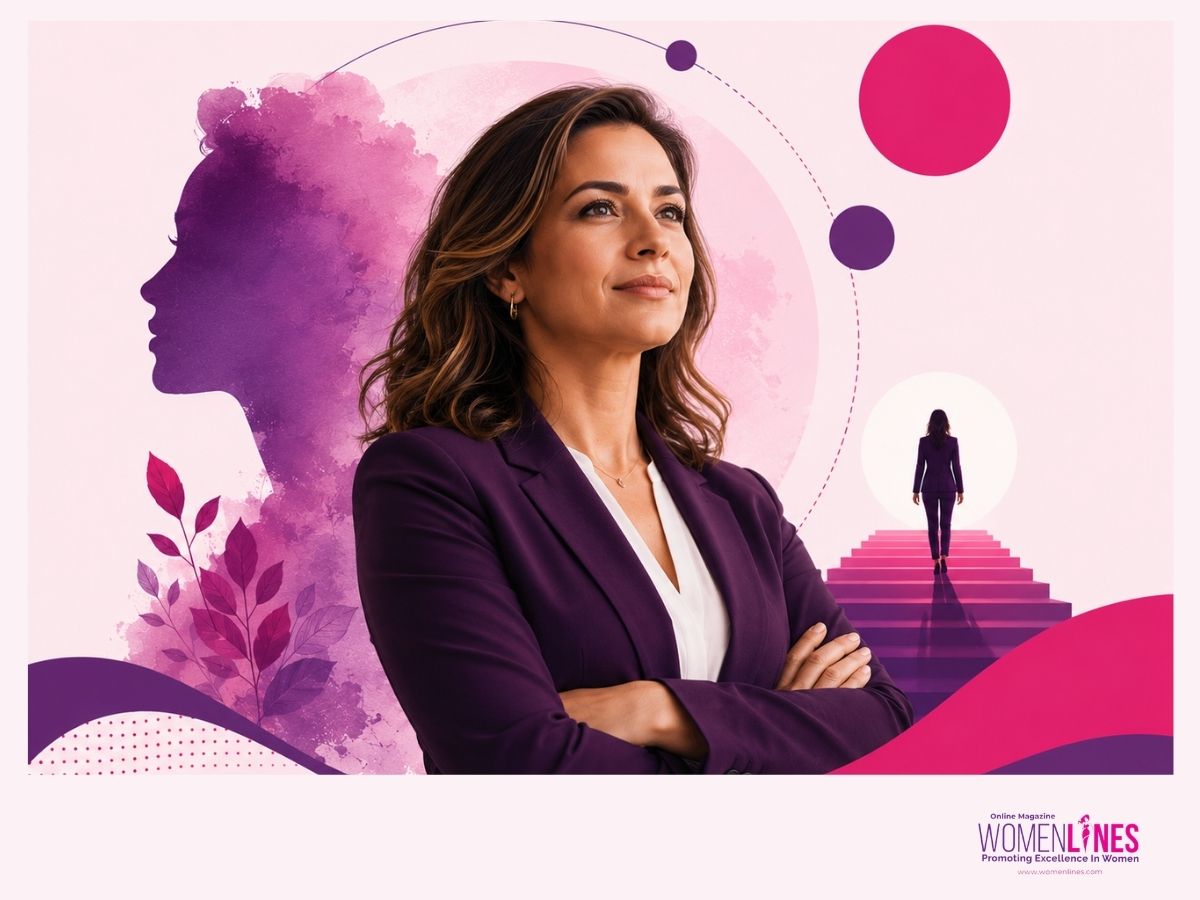
That is the Female Leadership Paradox: women are expected to demonstrate leadership, while simultaneously making their leadership socially comfortable.
And this is why I believe one of the most important leadership questions of 2026 is not, “How do we make women more confident?”
It is: “Why are organisations still charging women a tax for using authority?”
Representation is improving. Power is moving more slowly.
The numbers tell a more complicated story than the headlines.
The 2026 FTSE Women Leaders Review reports that women now hold 42.7% of FTSE 350 board positions. Non-executive director roles are effectively gender balanced at 49.5%.
That is real progress.
But women hold only 15.4% of FTSE 350 executive director roles, and the same report notes that only 8% of FTSE 350 CEO positions are held by women.
In other words, we have improved who is present around the board table faster than we have changed who holds day-to-day executive power.
This distinction matters. Representation can be visible while authority remains concentrated elsewhere.
A company can celebrate a gender-balanced board and still have succession systems, informal networks, promotion criteria and leadership norms that make executive progression harder for women.
The question is no longer simply, “Are women in the room?”
It is, “What kind of power are they trusted to hold once they get there?”
The double bind did not disappear. It became more sophisticated.
Research has described this problem for years: leadership has historically been associated with agentic traits such as assertiveness, confidence and decisiveness, while women have often been socially rewarded for warmth, cooperation and agreeableness.
A 2026 study published in Personality and Social Psychology Bulletin adds a striking contemporary layer. It found that women leaders using certain prevention-focused communication strategies could be perceived as more likeable while also being judged as less effective.
Think about the trap.
Be careful, relational and risk-aware — and you may be liked but underestimated.
Be direct, ambitious and dominant — and you may be respected for competence while paying an interpersonal penalty.
A major meta-analysis on dominance found that explicit dominance harmed women’s likeability more than men’s and was associated with poorer downstream outcomes such as hireability, while perceived competence did not show the same gender difference.
This is what I call the authority tax: the extra emotional and social labour women can be required to perform simply to make leadership authority acceptable to other people.
The issue is not that every woman experiences this in the same way. Race, age, class, disability, sexuality, accent and organisational culture all change the experience.
But the mechanism matters because it can quietly shape who speaks first, who negotiates hardest, who asks for the promotion, who is described as “executive material” and who decides that the cost of progressing is no longer worth paying.
Stop telling women the problem is confidence.
Confidence matters. But we should be careful not to turn a structural problem into a personal-development project.
The latest Office for National Statistics data put the UK full-time gender pay gap at 6.9% in April 2025. The ONS is clear that this is not a measure of unequal pay for the same job; it is a measure of differences in median hourly earnings across the workforce.
What makes the pattern especially relevant to leadership is that the gap is larger for employees aged 40 and over, and the proportion of women falls with age in higher-paying occupational groups where earnings tend to grow most strongly.
That should make leaders uncomfortable.
Because the career years in which experience, influence and earning power should compound are also the years when many women face intensified caring responsibilities, menopause, senior-level visibility pressures and decisions about whether the next promotion is compatible with the rest of their lives.
The ONS reported in 2026 that women spent, on average, 57 minutes more per day on unpaid work than men in March 2024.
So when organisations debate return-to-office mandates, “face time”, late meetings and what commitment should look like, those debates are not occurring on a gender-neutral playing field.
Since April 2024, employees in Great Britain have had a day-one statutory right to request flexible working. It is a right to request, not an automatic right to a particular arrangement. But the law reflects something leadership cultures should already understand: performance and presence are not the same thing.
If your promotion system rewards visibility more than value, it may be measuring availability rather than leadership.
The qualities dismissed as “soft” are becoming hard governance issues.
Here is another contradiction.
Women are often told not to be “too emotional”, “too sensitive” or “too people-focused” if they want to be taken seriously.
Yet modern organisations increasingly depend on exactly the capabilities hidden inside those labels: emotional intelligence, listening, psychological safety, relational awareness, ethical judgement and the ability to notice weak signals before they become crises.
These are not biologically female qualities. Men can and should demonstrate them too.
The problem is that traits historically coded as feminine have often been treated as supplementary to “real” leadership rather than part of it.
But look at the legal and organisational direction of travel.
Since October 2024, UK employers have had a proactive duty to take reasonable steps to prevent sexual harassment at work. From 30 October 2026, the Employment Rights Act 2025 will strengthen that duty to “all reasonable steps” and extend protections relating to third-party harassment.
The Equality and Human Rights Commission also updated its menopause-at-work guidance in June 2026. Menopause is not a standalone protected characteristic, but symptoms may engage protections relating to sex, age and disability under the Equality Act 2010, depending on the circumstances.
These are not peripheral “women’s issues”.
They are leadership, risk, retention and governance issues.
A leader who cannot hear discomfort early will eventually manage consequences late.
The answer is not “female leadership”. It is fuller leadership.
We should also resist a different stereotype: the idea that women are automatically more empathetic, collaborative or ethical simply because they are women.
That is not equality. It is another box.
The real opportunity is integration.
Authority without empathy can become fear.
Empathy without accountability can become avoidance.
Ambition without ethics can become extraction.
Collaboration without decisiveness can become paralysis.
The strongest leaders learn to hold both sides.
This is where the qualities women have sometimes been told to suppress may become an advantage — not because women should lead in one prescribed way, but because many have had to become highly skilled at reading context, managing relationships, anticipating reactions and navigating complexity simply to operate inside systems that were not originally designed around them.
That adaptive intelligence has business value.
What should organisations do differently?
Do not run another women-in-leadership programme without examining the system women return to afterwards.
Start by auditing the language of leadership. Who is “decisive” and who is “abrasive”? Who is “confident” and who is “self-promoting”? Who is “calm” and who is “not passionate enough”?
Separate style from outcomes. Evaluate the quality of decisions, delivery, risk management, team performance and strategic impact — not whether authority arrives in a familiar package.
Treat flexibility as workforce design, not a favour. If only people without significant caring responsibilities can access the informal moments that lead to progression, the system is not neutral.
Look at real power, not only representation. How many women hold P&L responsibility, CEO-track roles, operational authority and succession-plan positions?
And create cultures where challenge is safe. If women, or anyone else, must calculate the social cost of disagreeing before speaking, the organisation is losing intelligence.
Then ask the question that exposes the system:
Would we describe the same behaviour in the same way if a man had done it?
The next leadership revolution is not about fixing women.
Women do not need to become less warm to be powerful, less ambitious to be accepted, less human to be credible or more exhausted to prove commitment.
And organisations should stop confusing what feels familiar with what is effective.
The next era of female leadership will not be won by teaching women how to survive the double bind more elegantly.
It will be won when we remove the bind.
Because the qualities women have been told to suppress may not be weaknesses at all.
They may be the capabilities modern leadership can no longer afford to lose.
Author
Mafalda Carvalho is the Founder and Executive Consultant of Prestige Care Consulting, a UK-based consultancy focused on human-centred leadership, organisational culture, quality improvement and sustainable performance. She is also the author of The Prestige Leader: The Human Side of Healthcare Leadership. Her work explores the point where people, leadership, governance and business performance meet.