You’ve likely been there: standing in the “Skincare” aisle or scrolling through a sleek social media ad, staring at a product promising to “banish breakouts” with a “hero ingredient” like Vitamin C or Niacinamide. You buy it, you use it, and your acne gets worse. This is where medical gaslighting often begins.
When you seek help, you’re told you’re “purging,” that you’re “not being consistent,” or, most frustratingly, that your skin’s reaction is just stress and you need to relax. This is the crossroads of Medical Gaslighting and just a small part of women’s medical gaslighting and predatory marketing. In a world where “Clear Skin” is a multi-billion dollar industry, your intuition is often the first thing the industry tries to quiet.
The “Hero” vs. The “Hidden”: How Marketing Masks Damage
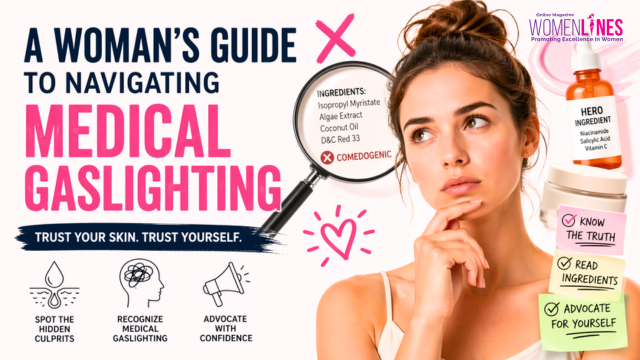
Cosmetic brands are masters of manipulation and marketing, but also front-label distraction. They will push a specific active ingredient that is in combination with several others that don’t necessarily work together and can sometimes contradict each other. For example, let’s say Salicylic acid for acne, while the rest of the bottle is filled with “silent” comedogens that go against everything, and in fact clog your pores and create more acne.
It’s a cycle of dependency as the active ingredient can temporarily work, and then eventually the comedogens have their impact, and you are misled to believe it’s a reaction to something else, purging or a stress reaction.
Common “Silent Culprits” in Acne-Marketed Products:
- Isopropyl Myristate & Palmitate: Often used to give makeup that “silky” feel, these are highly comedogenic and can trigger cystic flare-ups.
- Algae Extract: Frequently marketed as a “natural sea mineral” or “detoxifier,” it is actually one of the most pore-clogging ingredients in the industry.
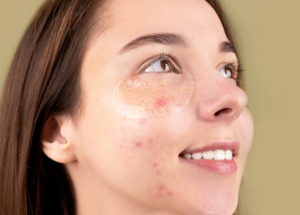
- D&C Red Dyes: Found in many blushes and foundations and actually marketed for “sensitive skin”, but this is coal tar derivatives and are notorious for causing acne on the cheek.
- Coconut Oil & Coco Butter: Usually pushed for those with dry skin, and are natural cleansers, but in fact, they can be really damaging to acne-prone skin and its skin barrier.
The overall red flag is that these ingredients are being pushed as being good, but in fact, they do the opposite. You want to look for cosmetics, skincare and brands that are selling products that go on your skin that are promoting they are non-comedogenic such as REFY Beauty. While this might be deceptive through some brands, they aren’t legally allowed to promote themselves as none of something but then are lying.
Spotting Medical Gaslighting
Medical gaslighting occurs when a provider dismisses your lived experience, often attributing physical symptoms to “stress,” “hormones,” or user error without proper investigation. In dermatology, this often sounds like.
“It’s just cosmetics”
“You must be using too many products”
“Acne is just part of being a woman; you’ll grow out of it”
When a professional minimises the pain or psychological toll of a skin condition, they aren’t just ignoring your skin, but in fact, they are ignoring you.
How To Advocate for Your Skin (and Your Sanity)
If you feel your concerns are being brushed aside, you have the right to push back. Here is your advocacy toolkit:
The Ingredients Audit
Before the appointment, bring a list of every product you use. If a doctor dismisses a flare-up as “stress,” to point to specific ingredients. Then you can address this topic head-on and with the knowledge of what products are actually being used on your face. Ideally, you want to work alongside a professional who asks for all of this information, but that can come at a price to speak to a private dermatologist.
Document The Unseen
There is so much that goes on behind closed doors that can contribute to acne, such as diet, menstrual cycle, so you could record your skin daily for a month and see how it fluctuates and make notes of what you ate that day, what products you used, and everything in between.
Ask For The “Why”
If your dermatologist suggests a treatment like Accutane or Spironolactone) When explaining the root cause, ask: What specific markers in my skin or blood led to this recommendation and so forth.
It’s also not always a good thing if that’s the immediate recommendation from them, as it seems like a cheat code and to just get it over and done with. These types of treatments can be pretty rough and should be used carefully; therefore, be sure to ask as many questions and push back on specific recommendations.
Author
Darcy Fowler
Also read: How AI Wearables Are Transforming Women’s Health in 2026
-> Subscribe for powerful stories, expert insights, and visibility strategies that help you grow with purpose and presence.
Follow Womenlines on Social Media