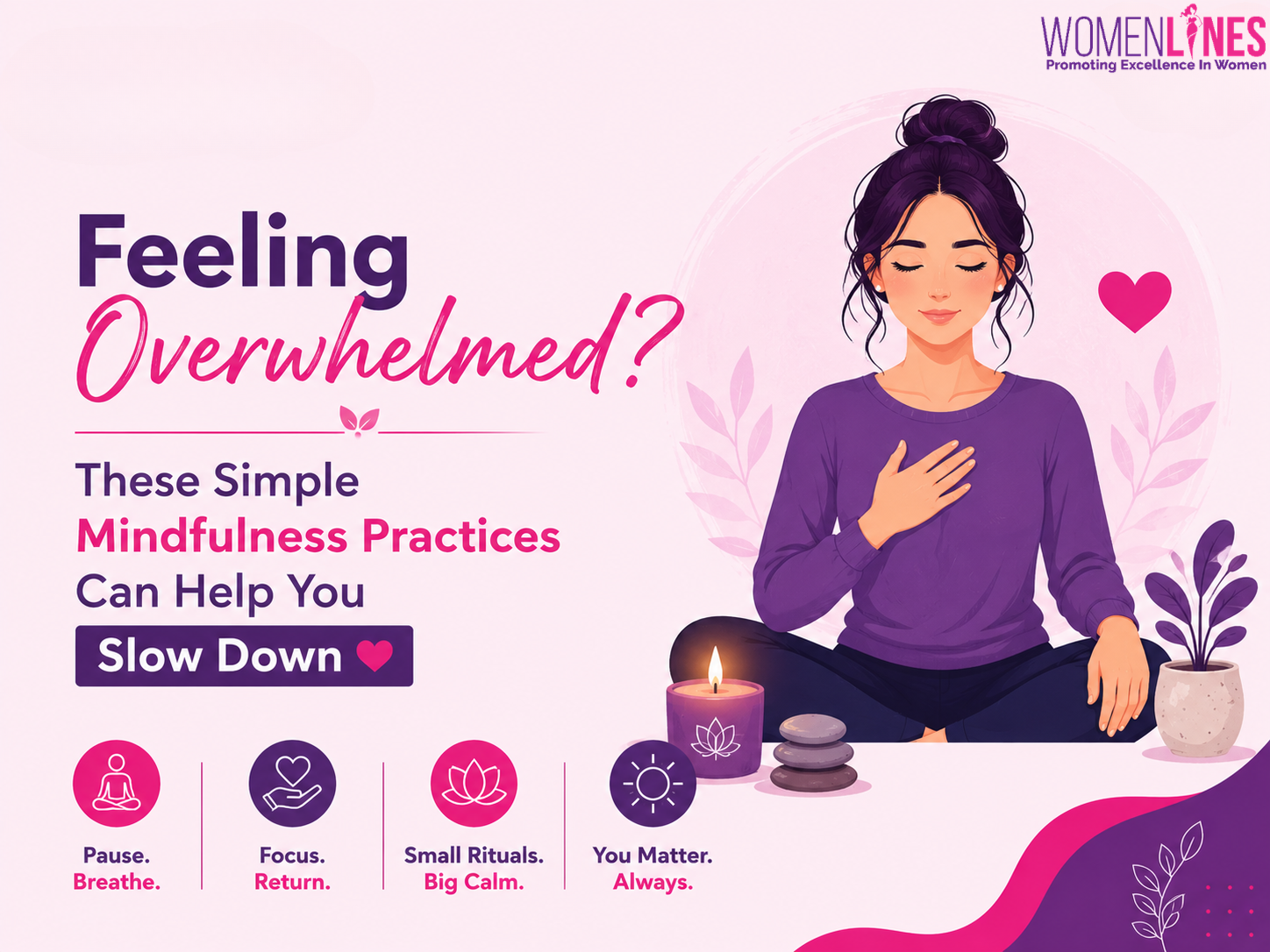
Discover simple mindfulness practices that busy women can incorporate into everyday life to reduce stress, create calm, and reconnect with themselves.
In a busy day, it is easy to move from one task to another without noticing how much we are carrying. A message arrives while breakfast is still unfinished. A work call begins before the mind has settled. A family need appears just as a personal plan begins to take shape. Nothing is dramatic on its own, yet the body can feel rushed and the mind can become full.
Many people think mindfulness requires a quiet room, a perfect routine, or a long stretch of time. Those things can help, but they are not always available. Sometimes the most useful practice is much smaller: one pause, one breath, one object that gently reminds us to return.
A small object can become a simple anchor for attention. It may be a stone on a desk, a bead bracelet near a journal, a smooth shell by a bedside table, or any meaningful item that feels steady in the hand. The object does not need to be rare, expensive, or spiritual in a formal way. Its purpose is not to impress anyone. Its purpose is to help the person using it remember to slow down for a moment.
The value of this kind of anchor is its simplicity. When life feels scattered, the mind often needs something concrete. Touching a small object gives attention a place to land. Instead of trying to force calm, a person can simply notice: this is the texture, this is the weight, this is my breath, this is where I am.
This small pause can be used in many ordinary moments. Before opening a laptop, one can touch the object and take three slow breaths. Before writing in a journal, one can hold it for a few seconds and ask, “What am I really feeling today?” Before entering a difficult conversation, one can use it as a quiet reminder to listen with more patience. After a long day, placing it back in the same spot can mark the transition from work energy to home energy.
The practice works best when it stays modest. An anchor object should not become another thing to manage or display. It does not need a complicated ritual around it. It should not be used to avoid responsibility or emotions. Instead, it can support a healthier rhythm: pause, notice, return, continue.
For women who carry many visible and invisible responsibilities, this small kind of practice can be especially useful. So much emotional labor happens quietly. We remember appointments, prepare meals, respond to messages, support friends, care for children or parents, and keep track of details that others may never see. A short pause does not remove those responsibilities, but it can create a moment of inner space within them.
Choosing an anchor object can be intuitive. Look for something that feels pleasant to touch and easy to keep nearby. It should be small enough to fit naturally into daily life. A desk object may support work transitions. A bracelet may help during travel or errands. A stone near a meditation space may signal the beginning of quiet time. The object itself is less important than the attention it invites.
It can also help to give the object one clear purpose. For example: “When I touch this, I return to my breath.” Or: “When I see this, I pause before reacting.” This keeps the practice grounded. The object is not expected to solve a problem. It simply reminds the mind to come back before moving forward.
Over time, these little pauses can shape the atmosphere of a room and the rhythm of a day. A home does not need to be filled with many meaningful things to feel meaningful. Sometimes one carefully chosen object is enough to create a sense of intention. It becomes a quiet signal: this space is not only for doing, producing, and responding. It is also for noticing, resting, and returning.
Mindfulness does not have to be dramatic to be real. It can live in the pause before a reply, the breath before a decision, the way a hand rests on a small object before the next task begins. In that tiny moment, we remember that we are not only moving through the day. We are also allowed to come back to ourselves.
Author:
Yang writes for PotalaStore about mindful rituals, Buddhist-inspired jewelry, and the small objects that help people return to presence in everyday life.
Also read:
Follow Womenlines on Social Media